Marketing Beyond Awareness at UCHealth
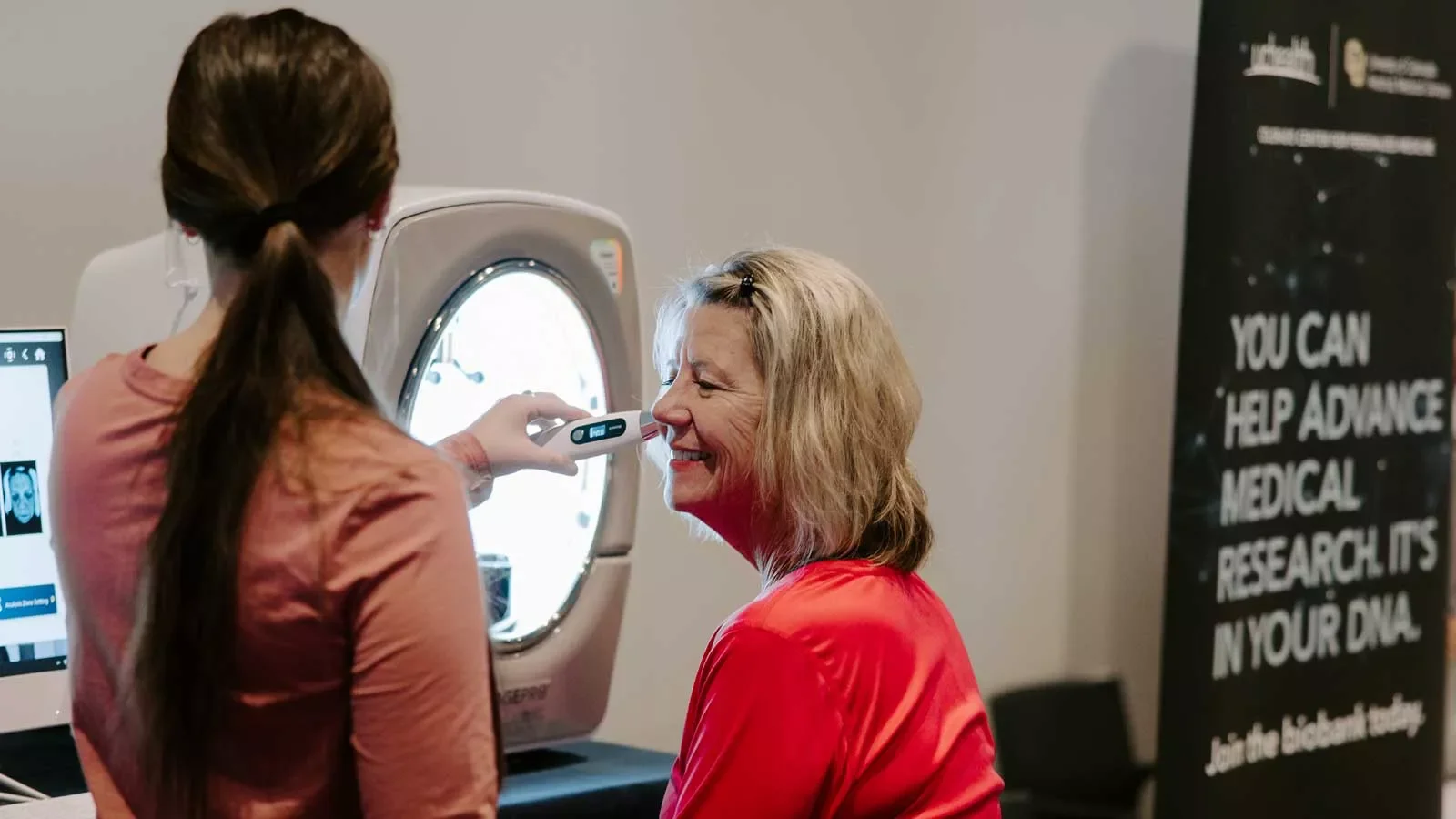
Using patient engagement strategy to support access, preventive care, utilization and value-based healthcare at UCHealth.

The three patient actions to influence:
Get the right care, in the right place.
Take preventive action earlier.
Make care easier to access.
Role / Tools:
Senior Marketing Strategist / Patient Engagement Strategy, CRM & Email Marketing, Paid Media, Digital Strategy, UX, Audience Segmentation, Cross-Functional Leadership, Performance Analytics
Objective:
Use marketing not only to build awareness, but to influence patient behaviors that support better health outcomes and organizational priorities—including preventive care participation, appropriate care utilization and access to lower-cost care options.

-
Developed patient education materials and marketing strategies designed to help people better understand when to use primary, urgent, virtual or emergency care, supporting broader efforts around appropriate care utilization.
-
Led development and promotion of a consumer-friendly interactive webpage that translates complex clinical guidance into approachable, age-based health information for preventive screenings.
-
Developed targeted outreach supporting annual wellness visits and chronic-condition education, using audience segmentation and patient communication to encourage populations to take the next step in their care and close care gaps.
-
Supported strategies connecting patients with virtual care while helping tell the broader story of how UCHealth uses technology & innovation to expand access and improve care delivery.
Approach:
Healthcare marketing sits at the intersection of patient needs and an extraordinarily complex business model. My work at UCHealth focuses on translating organizational priorities—quality measures, access challenges, utilization patterns and value-based care goals—into communications that make sense to patients.
Rather than treating campaigns as isolated marketing initiatives, I work across clinical, operational, digital and marketing teams to identify where communication can remove friction or encourage a meaningful patient action.
That has included helping patients understand where to seek care, encouraging preventive screenings and annual wellness visits, re-engaging populations around chronic health risks, and connecting patients with increasingly accessible virtual and ambulatory care options.
The challenge is to make complex healthcare decisions feel simple to a patient while ensuring that every strategy accounts for clinical accuracy, operational realities and the broader economics of healthcare delivery.
“How can marketing influence patient behavior in ways that are good for the patient and valuable for the health system?”
What I’ve learned
Working in healthcare changed how I think about the role of marketing.
The impact of a campaign isn't always a click, impression or conversion. Sometimes it's a patient scheduling a preventive visit they had been putting off. Sometimes it's helping someone understand which level of care they need. And sometimes it's changing behavior across a large enough patient population that the downstream implications extend to quality measures, utilization and cost.
That has pushed me to think beyond communications and toward systems: how patient behavior, operations, clinical priorities, digital experiences and financial incentives connect—and where marketing can meaningfully influence that system.